




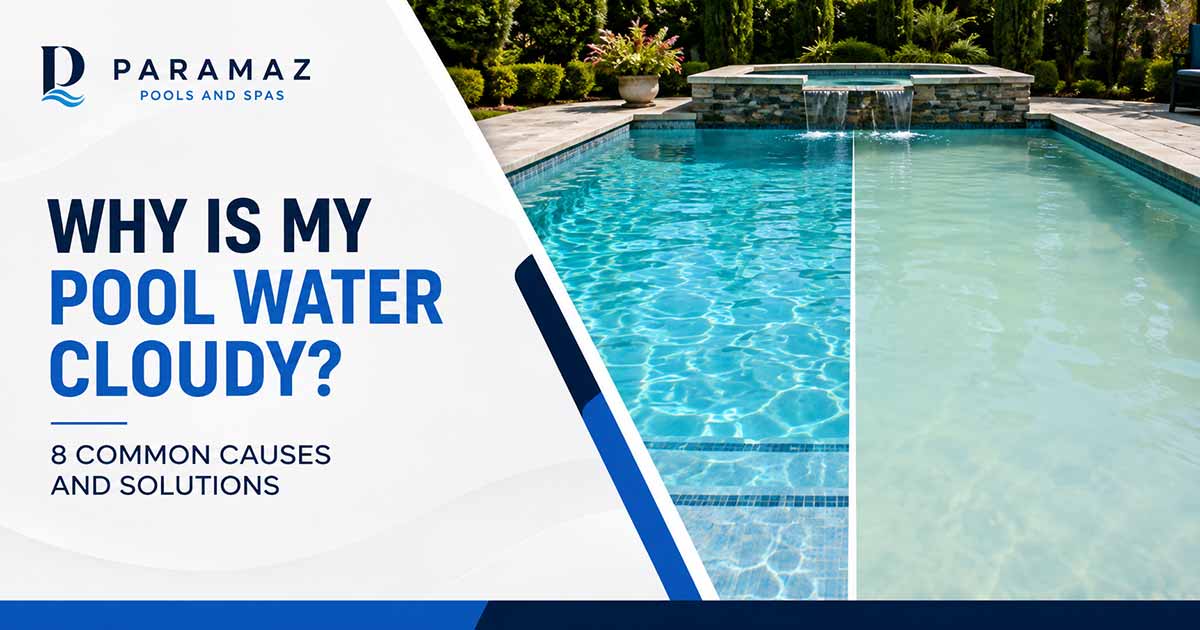
Why Is My Pool Water Cloudy? 8 Common Causes and Solutions
Cloudy pool water can appear white, hazy, dull, greenish, or milky. In some cases, the bottom of the pool may become difficult to see.
Cloudiness is not only a cosmetic issue. The CDC advises swimmers to avoid unusually cloudy water because it can indicate increased germ levels and make it harder to see underwater hazards.
To clear the pool properly, the cause must be identified rather than adding random chemicals.
1. The Sanitizer Level Is Too Low
Chlorine or another approved sanitizer helps control germs and organic contamination.
When the sanitizer level is too low, microorganisms and algae can begin developing, causing the water to lose clarity.
The CDC recommends maintaining pool pH between 7.0 and 7.8 with at least 1 ppm chlorine. When cyanuric acid or stabilized chlorine is used, the CDC recommends at least 2 ppm chlorine. Always follow local requirements and the product label for your specific system.
2. The pH Is Out of Balance
Incorrect pH can reduce sanitizer effectiveness and contribute to:
- Cloudy water
- Scale formation
- Surface damage
- Eye or skin irritation
- Equipment corrosion
Test the pH before adding additional chemicals. Adding more chlorine without correcting the underlying imbalance may not solve the problem.
3. The Pool Filter Is Dirty
A dirty cartridge, clogged sand filter, or contaminated DE filter cannot remove suspended particles effectively.
Check:
- Filter pressure
- Cartridge condition
- Backwashing performance
- DE-grid condition
- Pump and skimmer baskets
- Filter-valve position
Jandy troubleshooting guidance identifies dirty or damaged filter cartridges, poor chemistry, insufficient sanitizer, and inadequate run time as possible reasons for unclear water.
4. The Pump Is Not Circulating Enough Water
Cloudiness may occur when treated water is not circulating throughout the pool.
Possible circulation problems include:
- Pump speed set too low
- Pump not running long enough
- Clogged impeller
- Air leak
- Low pool-water level
- Blocked plumbing
- Closed valves
- Weak or damaged pump
- Incorrectly positioned return jets
Before increasing pump speed, check for restrictions and confirm that the system is operating normally.
5. Algae Is Beginning to Grow
Early algae growth may appear as:
- Dull water
- Slight green tint
- Slippery walls
- Cloudy corners
- Dust-like material returning after brushing
The pool may become cloudy before obvious green algae appears.
Treatment generally involves correcting chemistry, brushing surfaces, improving circulation, cleaning the filter, and using an appropriate algae-treatment process according to professional guidance and product instructions.
6. Heavy Rain or Storm Debris Entered the Pool
Rain can introduce:
- Dirt
- Pollen
- Leaves
- Organic contamination
- Landscape runoff
- Dilution of pool chemicals
After heavy weather:
- Remove large debris.
- Empty the baskets.
- Test the water.
- Adjust chemistry as needed.
- Brush and vacuum the pool.
- Clean the filter if pressure rises.
- Restore adequate circulation.
Do not assume that running the pump alone will correct major chemical imbalance.
7. The Pool Had Heavy Swimmer Use
Sunscreen, body oils, cosmetics, sweat, dirt, and other organic material can place additional demand on the sanitizer and filter.
After heavy use, the pool may require:
- Water testing
- Chemical correction
- Additional filtration
- Basket cleaning
- Filter cleaning
- Surface brushing
The required treatment depends on actual test results.
8. Calcium, Metals, or Incorrect Chemical Application
Cloudy water may sometimes result from:
- High calcium hardness
- Scale formation
- Metals in the water
- Incompatible chemicals
- Chemicals added too quickly
- Improper order of application
- Undissolved pool products
Do not continue adding clarifier or shock without testing the water. Excessive or incompatible chemical treatment may make diagnosis more difficult.
How to Clear Cloudy Pool Water
Step 1: Do Not Swim
Wait until the water is properly sanitized, balanced, and clear enough to see the pool bottom and drain covers.
Step 2: Test the Water
Measure:
- Free chlorine or sanitizer
- pH
- Total alkalinity
- Cyanuric acid where applicable
- Calcium hardness where relevant
Professional testing may be helpful when home results are inconsistent.
Step 3: Remove Debris
Empty the skimmer and pump baskets. Skim the surface and vacuum settled debris.
Step 4: Inspect the Filter
Check the pressure and clean, backwash, recharge, or repair the filter according to its type and manufacturer instructions.
Step 5: Confirm Water Circulation
Verify that:
- The pump is primed
- Return jets have flow
- Valves are open
- There are no major air leaks
- The pump speed is sufficient
- Water is circulating throughout the pool
Step 6: Correct the Chemistry
Make adjustments based on accurate test results and chemical-product instructions.
Avoid mixing chemicals together. Add products separately and follow all label warnings.
Step 7: Brush and Continue Filtering
Brush the walls, steps, corners, and floor so that algae and fine material can move into the filtration system.
The filter may require additional cleaning while the pool clears.
When Should You Call a Pool Professional?
Arrange professional service when:
- The water remains cloudy after chemistry is corrected
- The pump repeatedly loses prime
- The filter pressure is abnormal
- Dirt returns through the jets
- Algae keeps returning
- The pump or filter appears undersized
- You suspect damaged filter media
- Electrical or equipment problems are present
- The pool has become extremely cloudy or discolored
Frequently Asked Questions
Can I swim in slightly cloudy pool water?
It is safer to wait until the water is clear and properly sanitized. The CDC advises avoiding unusually cloudy water.
Will running the pump clear cloudy water?
It can help when the chemistry is correct and the filtration system is functioning properly. Circulation alone will not correct low sanitizer, algae, damaged filter media, or major chemical imbalance.
Why did my pool turn cloudy overnight?
Possible causes include rain, low sanitizer, heavy swimmer use, pump failure, poor circulation, algae development, or chemical imbalance.
Why is my water cloudy after adding chemicals?
The dosage, water balance, application order, calcium level, or product compatibility may have contributed. Test the water before adding additional products.
Pool Equipment and Circulation Service in Houston
Paramaz Pools can inspect pumps, filters, plumbing, automation, and circulation systems that contribute to cloudy pool water. We identify the equipment problem instead of relying on temporary fixes.
Call today for your FREE estimate.

